English Love 2001-2002
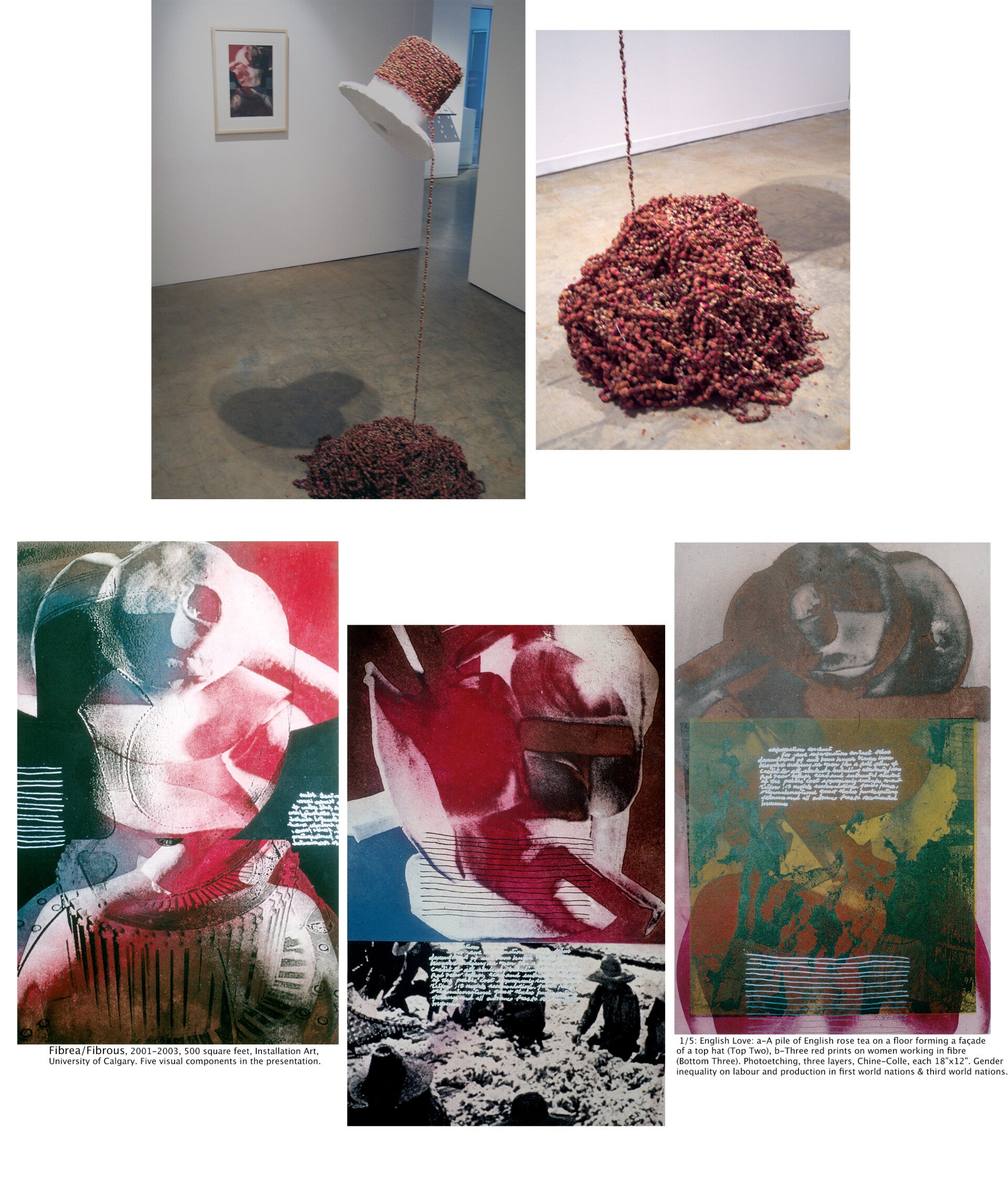
(Fibrea/Fibrous 2001-2003 was presented with English Love 2001-2002 as one larger installation).
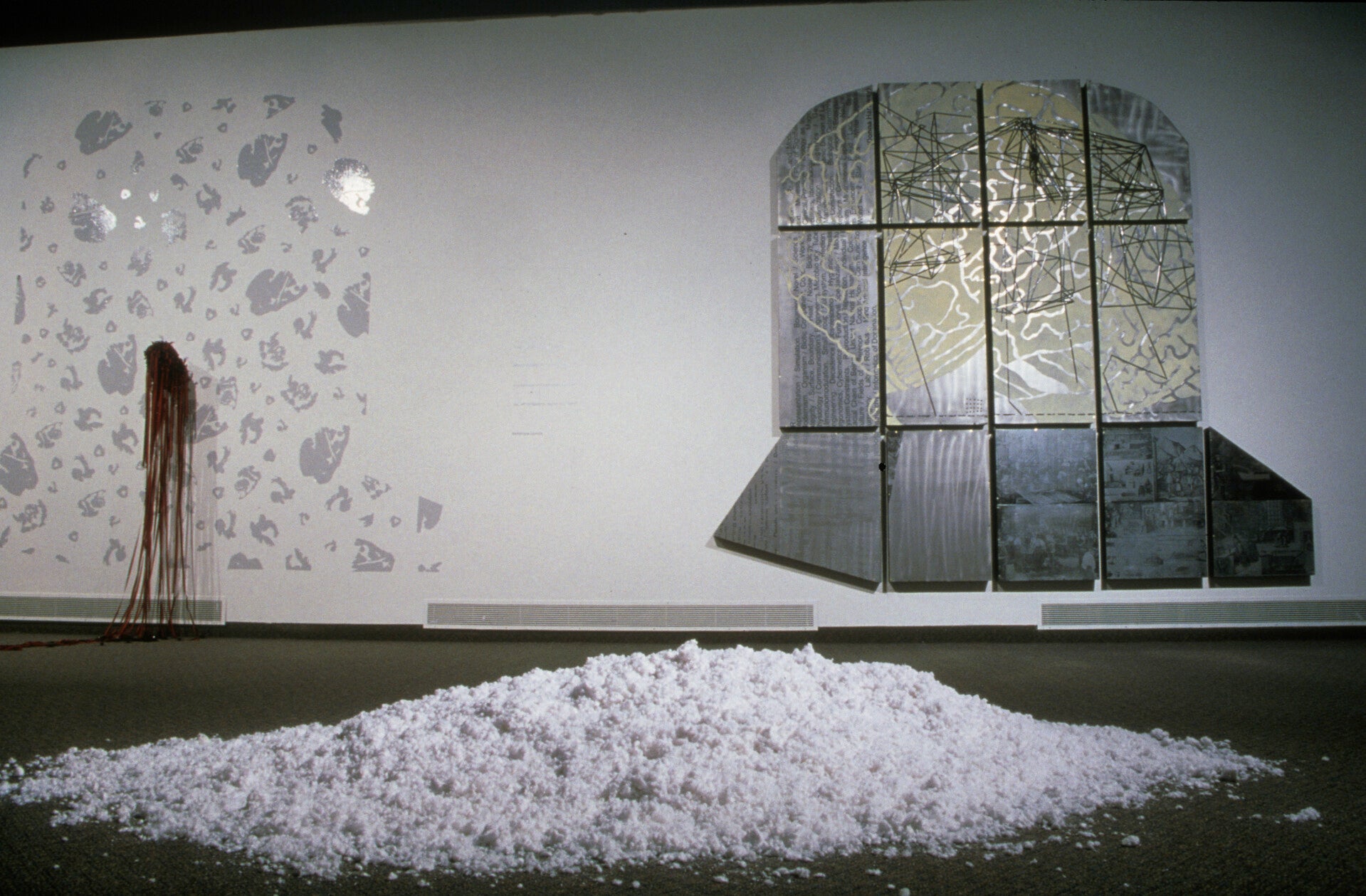
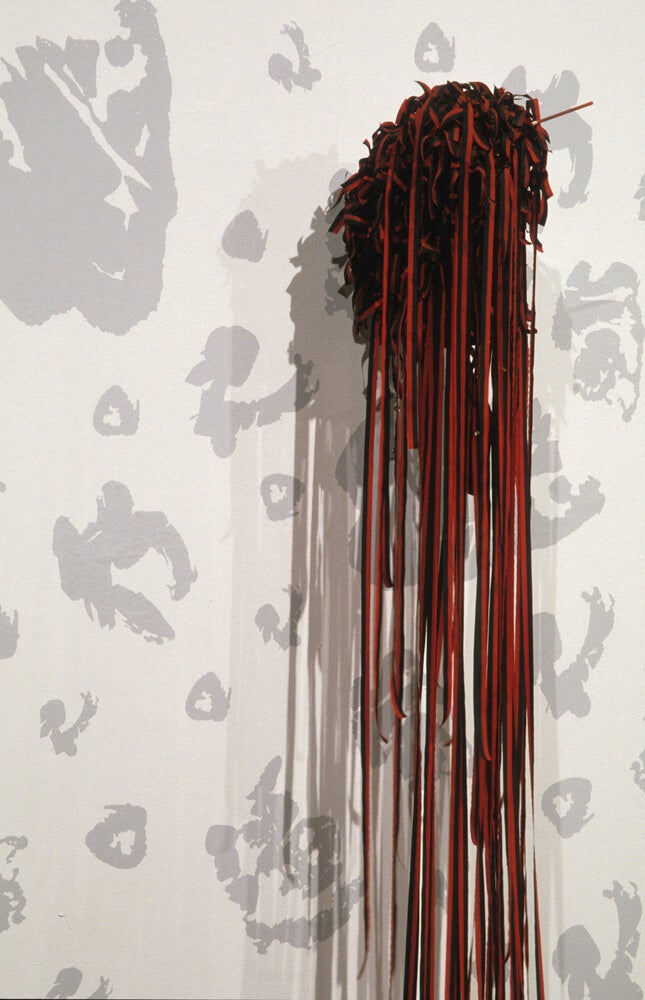
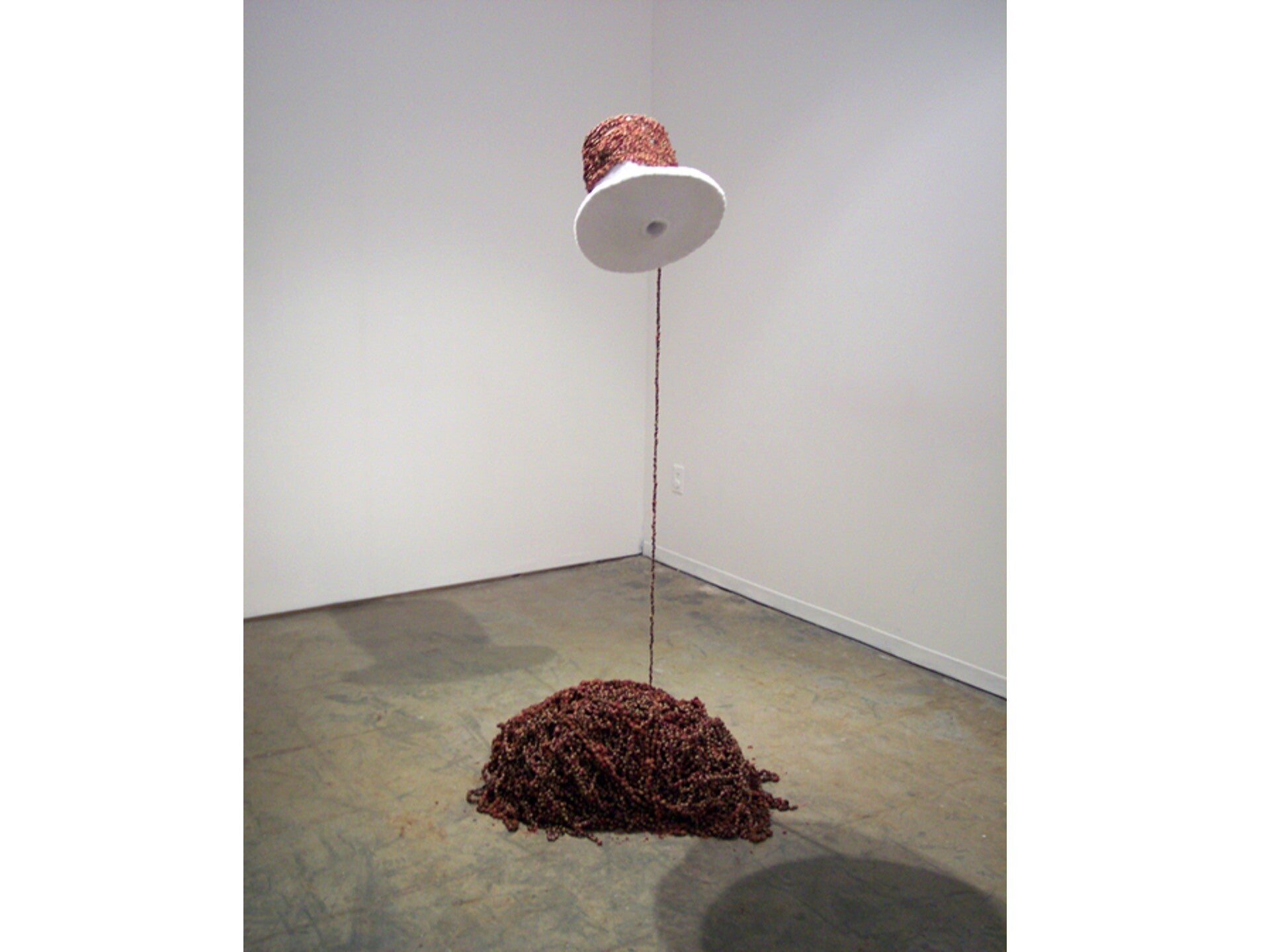
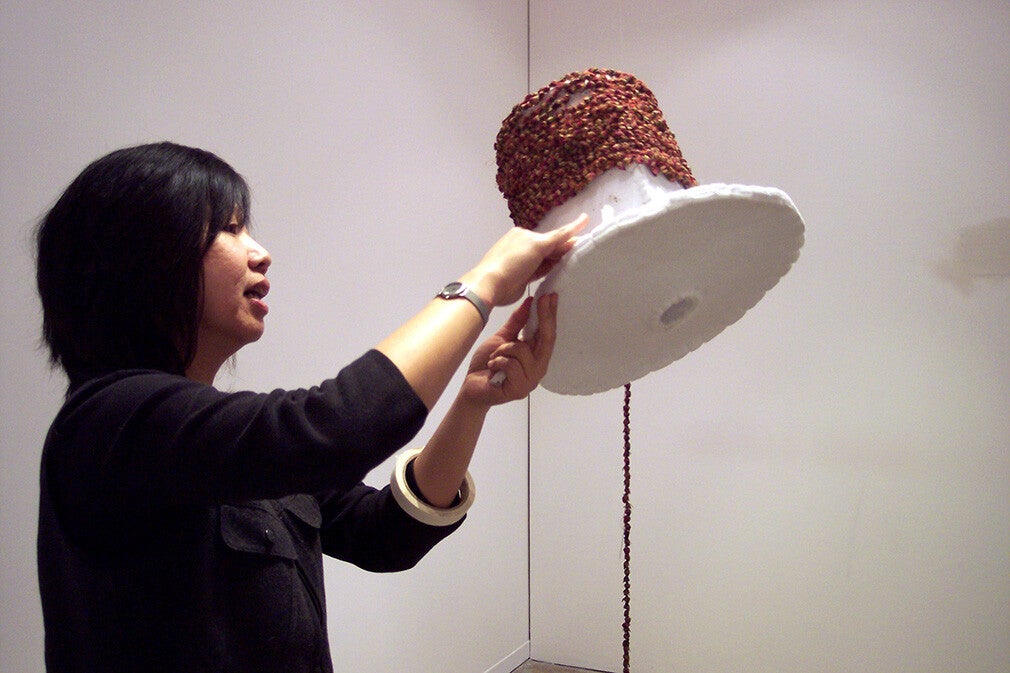
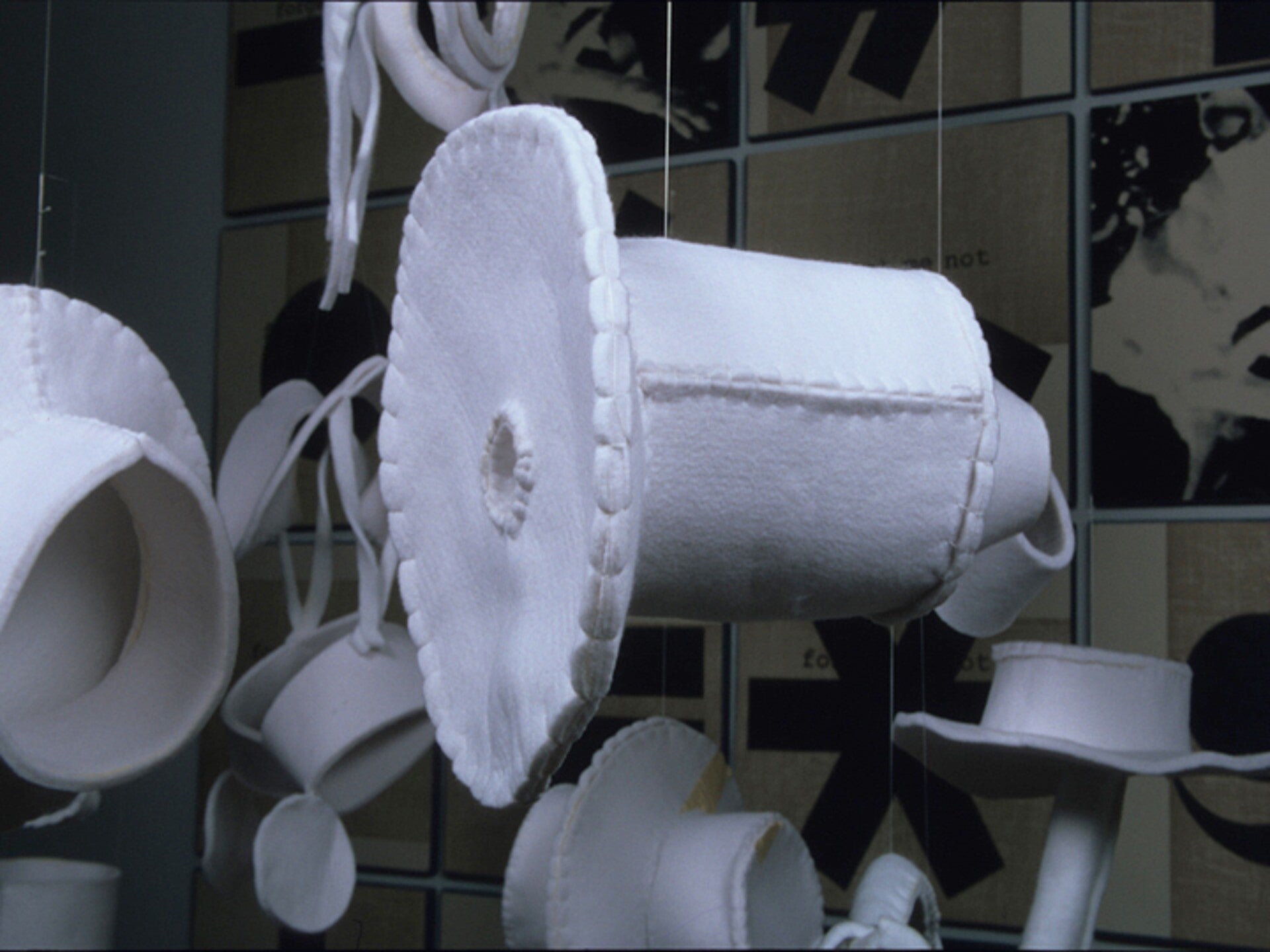
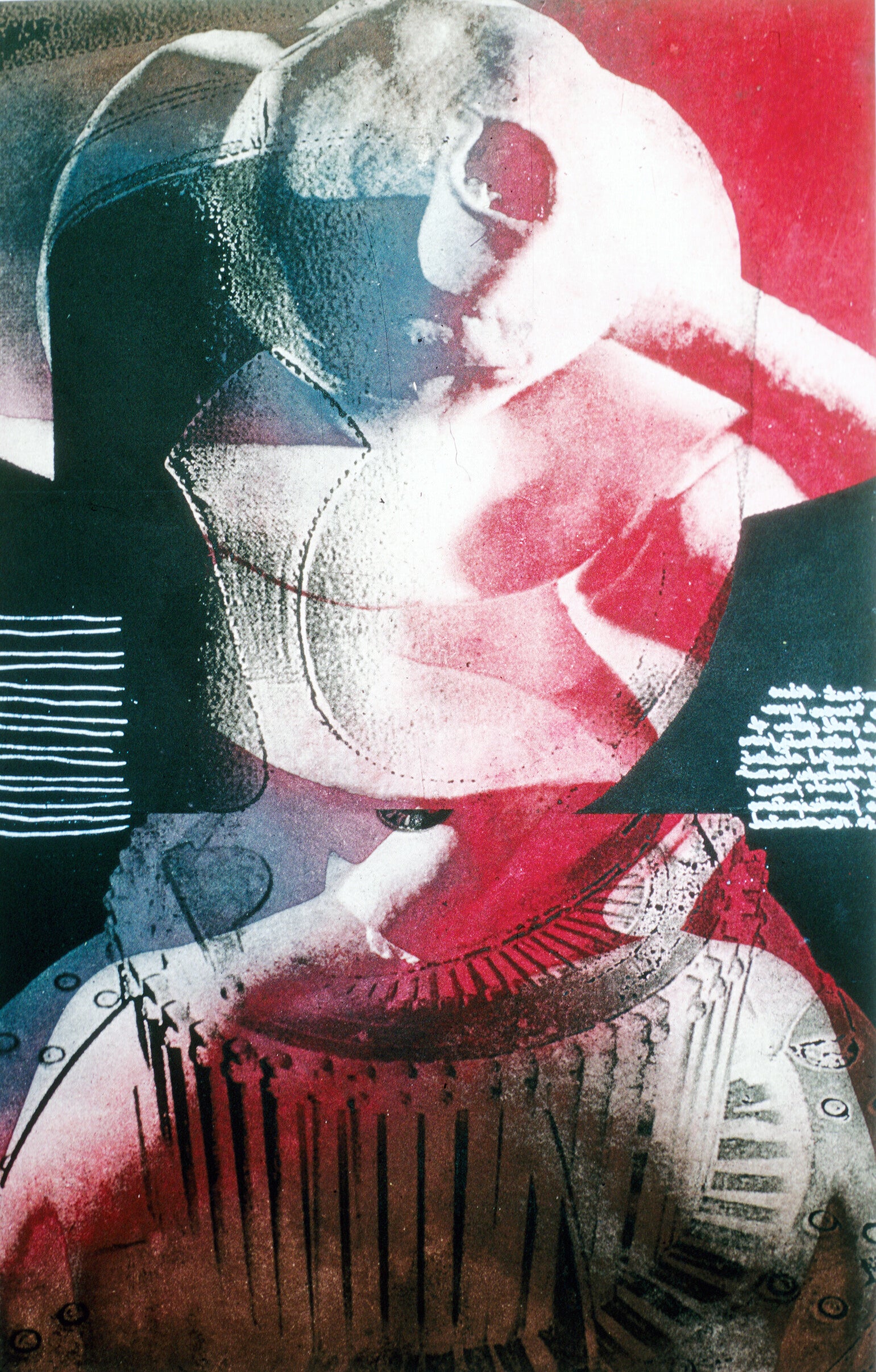
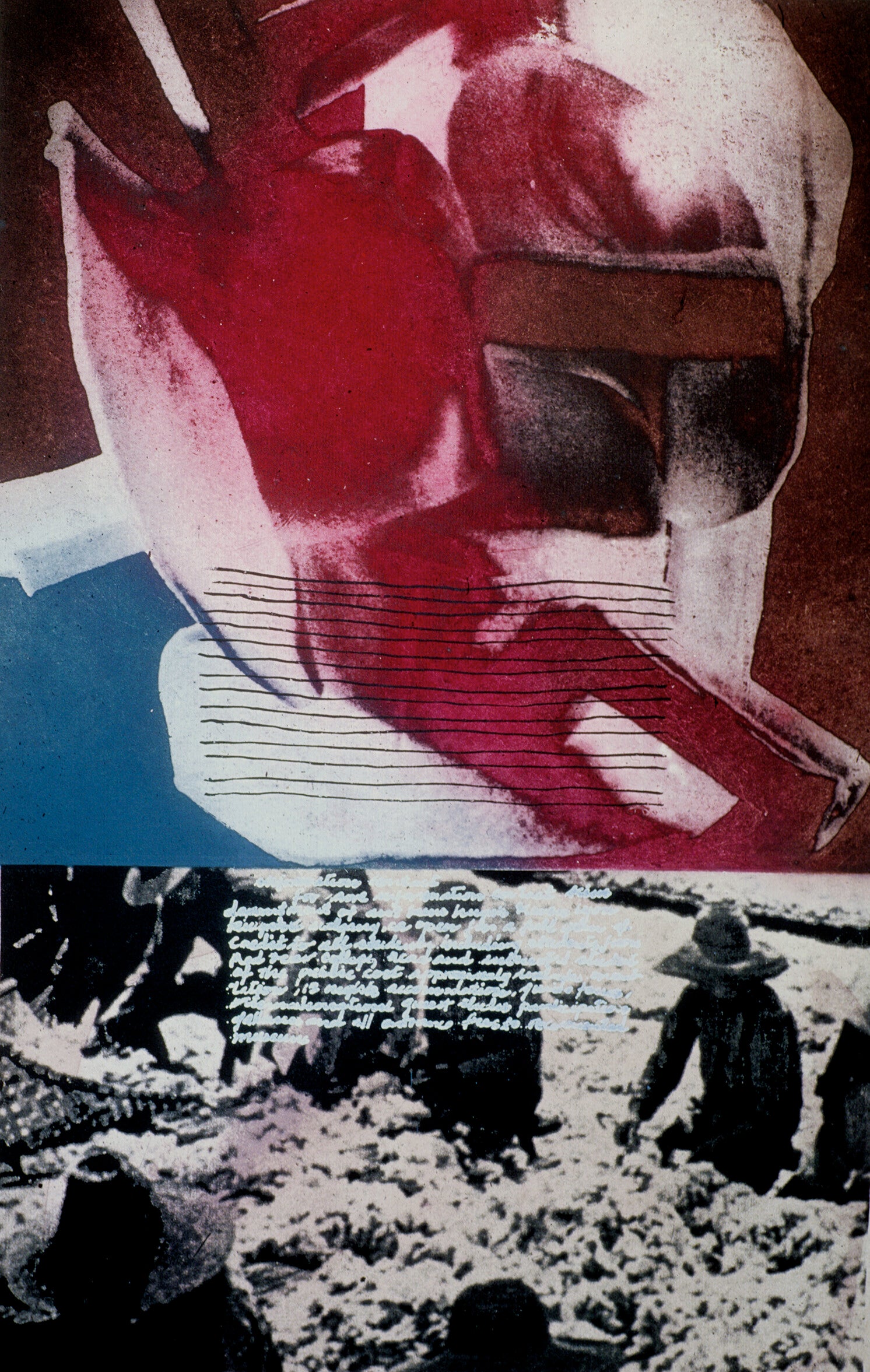
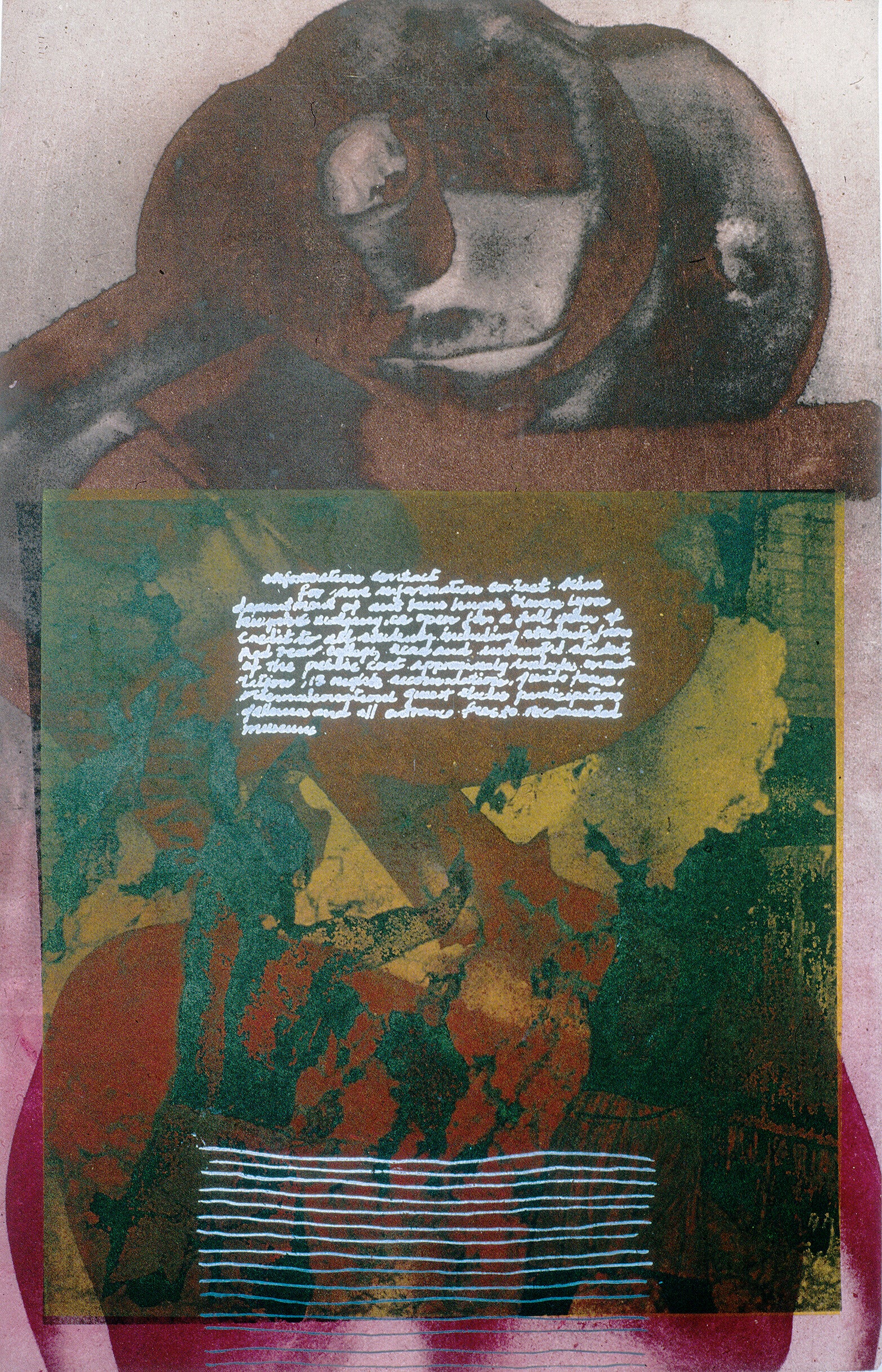
English Love: Three red prints, a hung top hat layered with red roses from the base, two giant top hats on wall.
The title English Love often evokes an idyllic view of landscapes, events, and peoples. However, in this installation, it reveals an ironic narrative reflecting the realistic consequences of the British legacy in colonized and post-colonized countries across Asia.
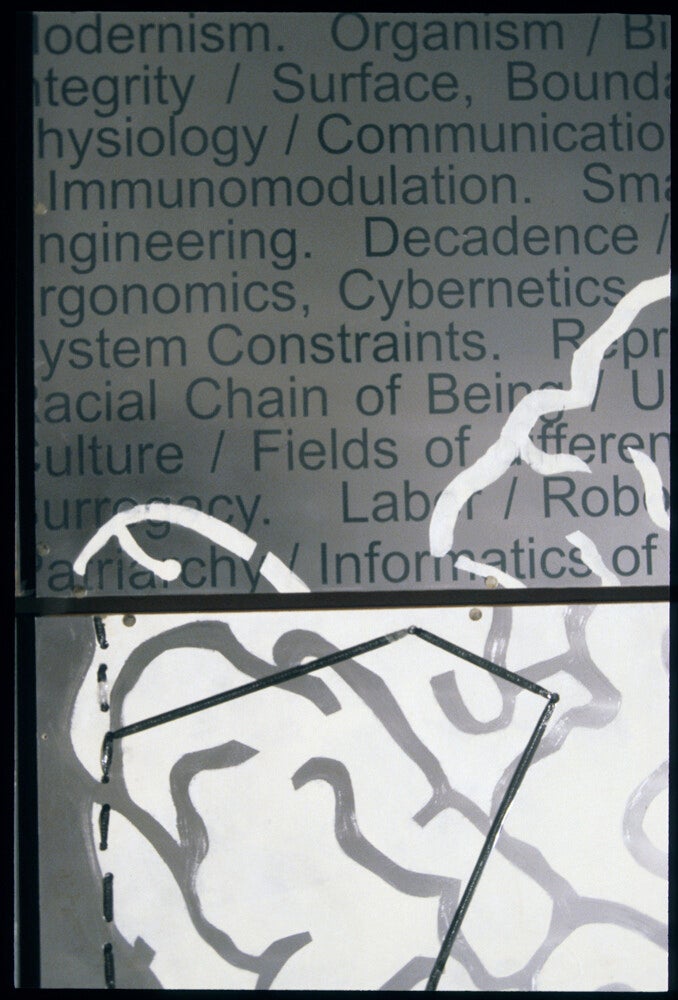
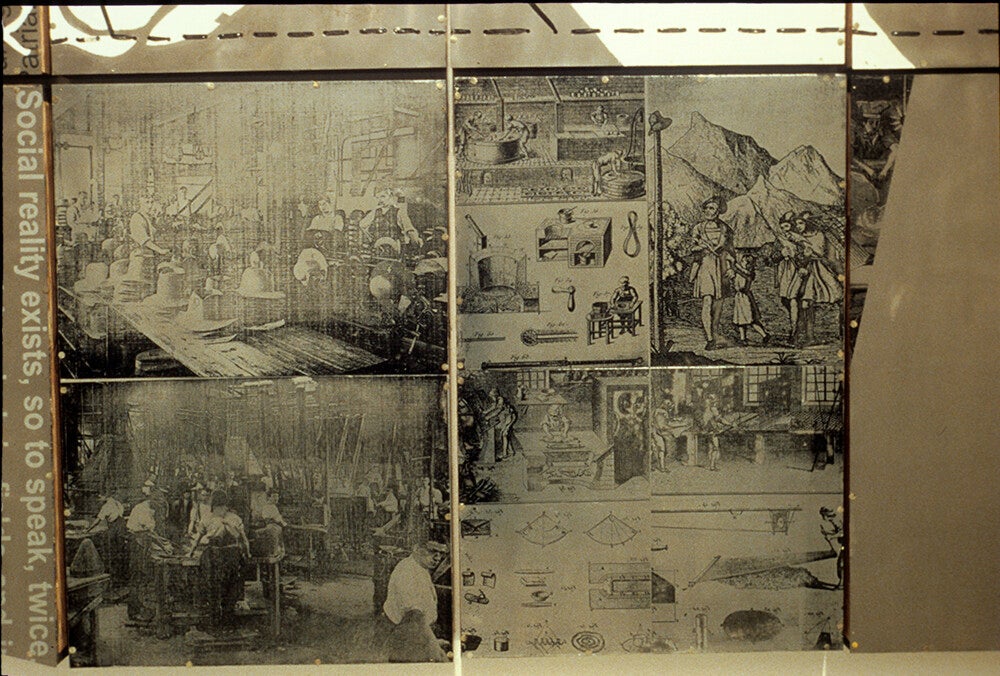
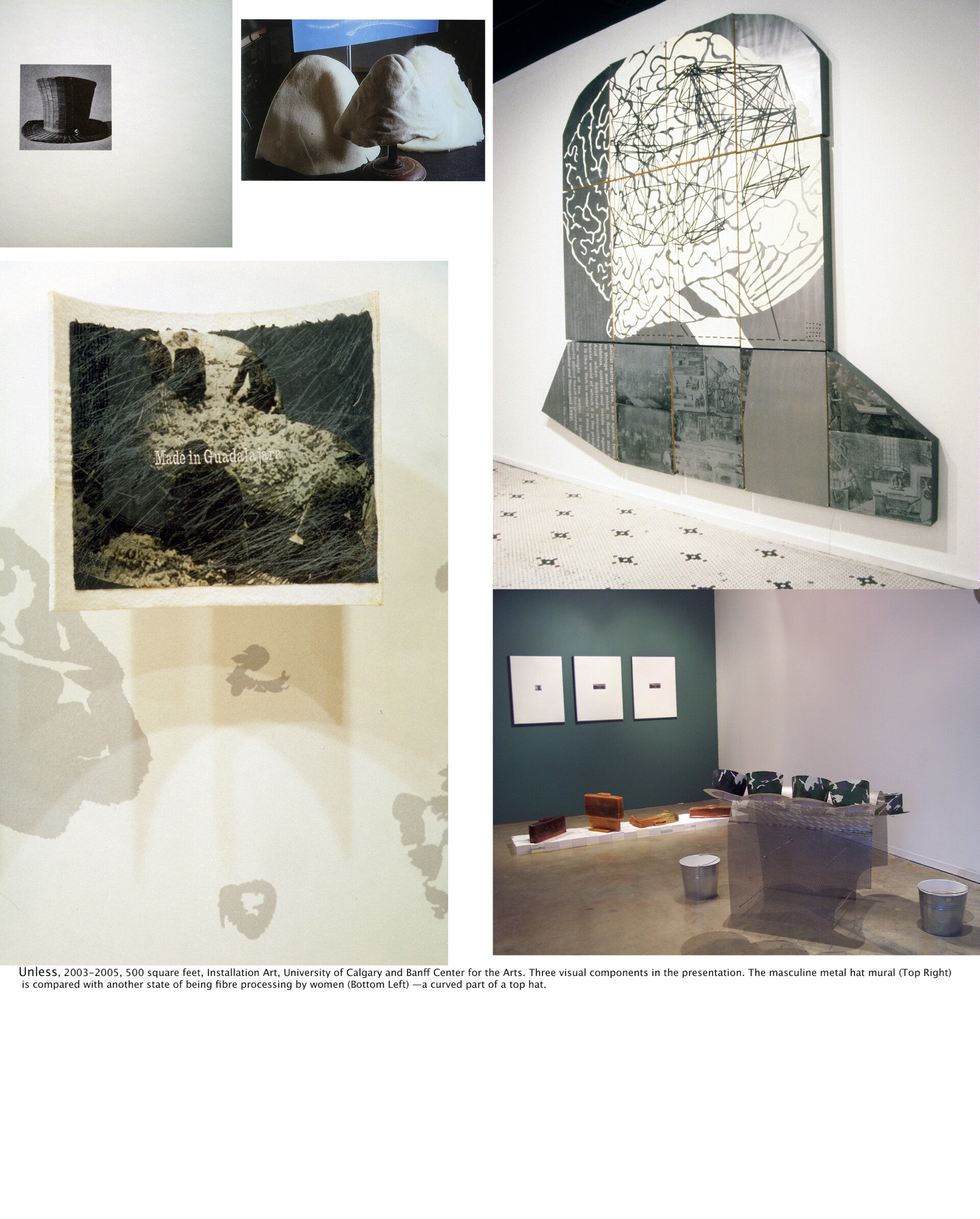
This narrative is illustrated through a duality presented on the main wall, where two oversized British top hats are showcased. The first hat captivates the audience with its masculine metallic appearance, featuring a complex grid-like construction that symbolizes the dominant global influence of the British Empire. In contrast, the second hat yields to a more flexible and organic form, echoing the silhouette of its counterpart. At the heart of this organic terrain lies a red brain, crafted from red typewriter ribbon, symbolizing the imprint of British influence on the intellectual and cultural landscape of a new world. The British Empire's competition with Portuguese, Spanish, Dutch, and French powers for control over approximately fourteen territories and ten countries in Asia from the 17th to the mid-19th century, with Hong Kong being the last territory held until 1997, is a testament to its extensive reach.
In juxtaposition to this pair, a series of three red prints, and a hanging closed top hat draped with an English tea rose serves as a poignant reminder of the Great Tea Race, which culminated in the Opium Wars of the 1840s and late 1850s. This historical reference invites contemporary viewers to reflect on current discussions surrounding free trade, access, and inequalities, prompting them to consider the extent to which present-day issues are rooted in the legal systems, language, and governmental structures established by the British Empire.