A.B Wild: Before the main fibre project, Neck to Neck: Rise up Faster than Sea, from 2017 to 2019, I initiated a print project to support an undergraduate printmaking scholarship at the University of Calgary and raise awareness about endangered species in Alberta, Canada. This project involved 17 senior printmaking students and faculty, producing lithography, etching, linocut, and screen prints of endangered Canadian species.
This production, Neck to Neck: Rise up Faster than Sea, initiated in 2019 and ongoing until December 2023, encompasses a multifaceted exploration of art, community engagement, and environmental stewardship. It is structured around four core components, each aimed at bridging gaps across ethnicities, generations, and demographics while fostering a deeper connection to our ecological surroundings.
1-Heart of Sight: This intervention seeks to expand the networks between academia and various communities by incorporating diverse ethnicities, intergenerational participants, and bridging demographic gaps. The goal is to enhance mentorship connections and foster a stronger sense of community unity (to be realized).
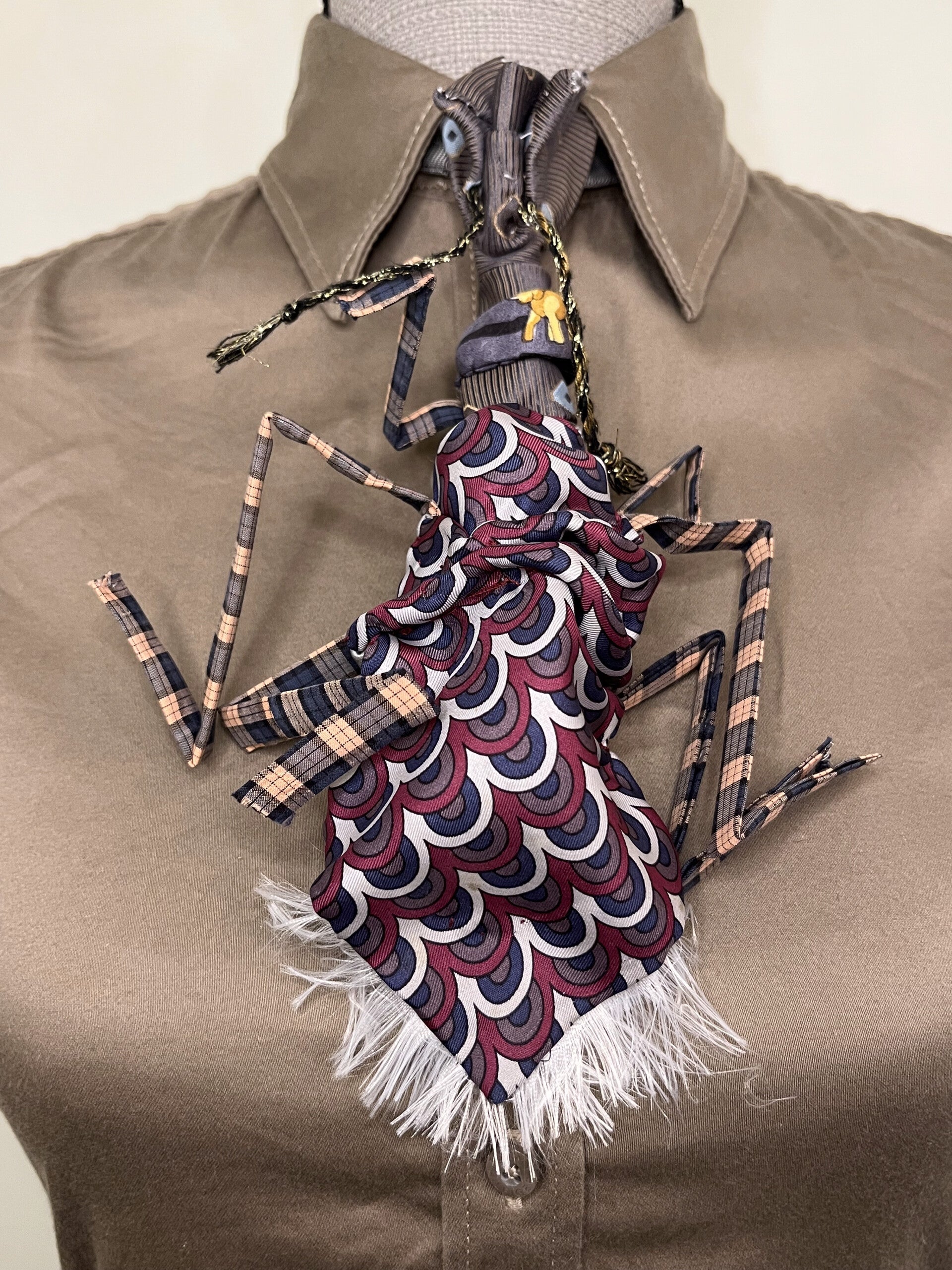
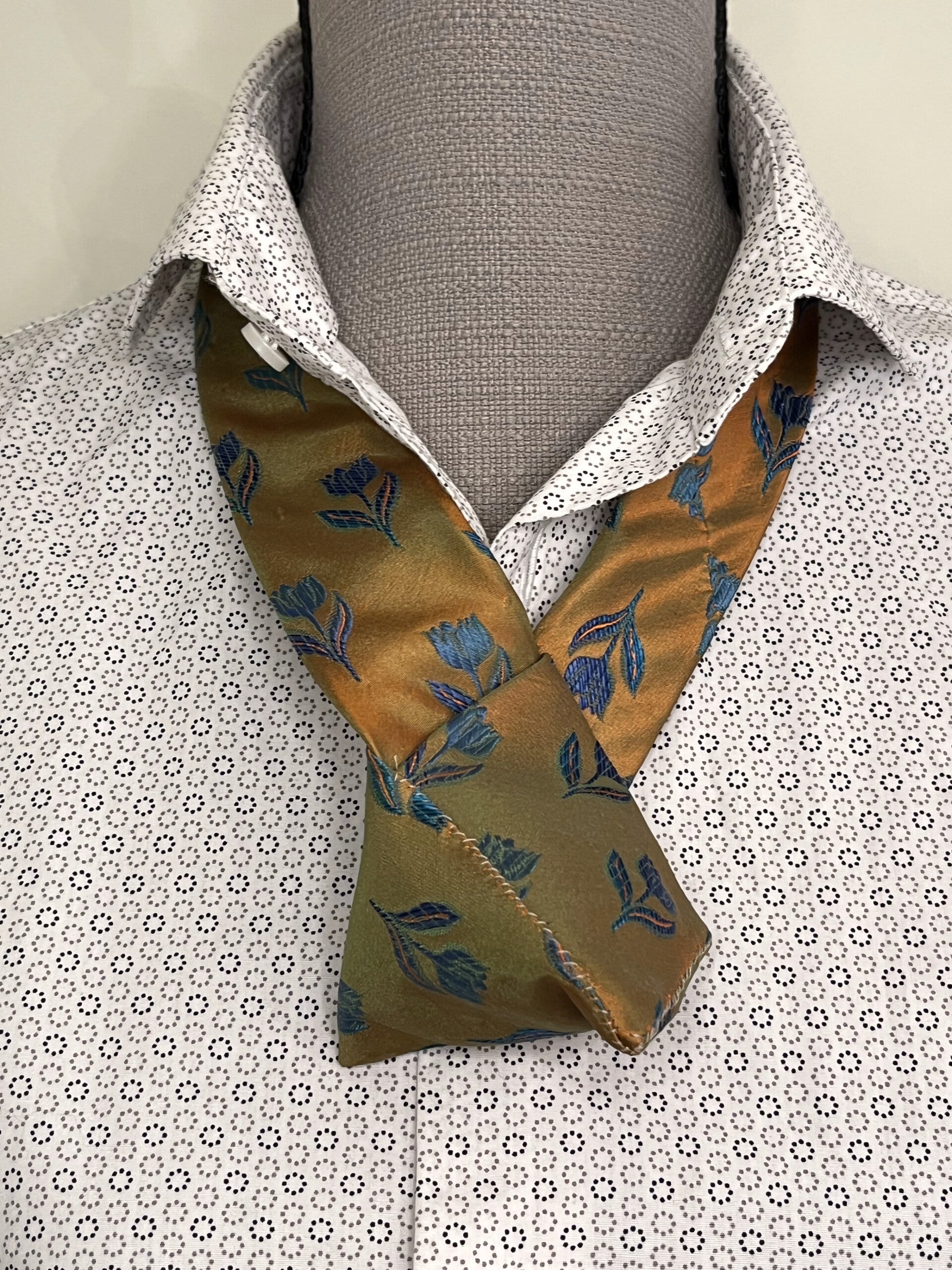
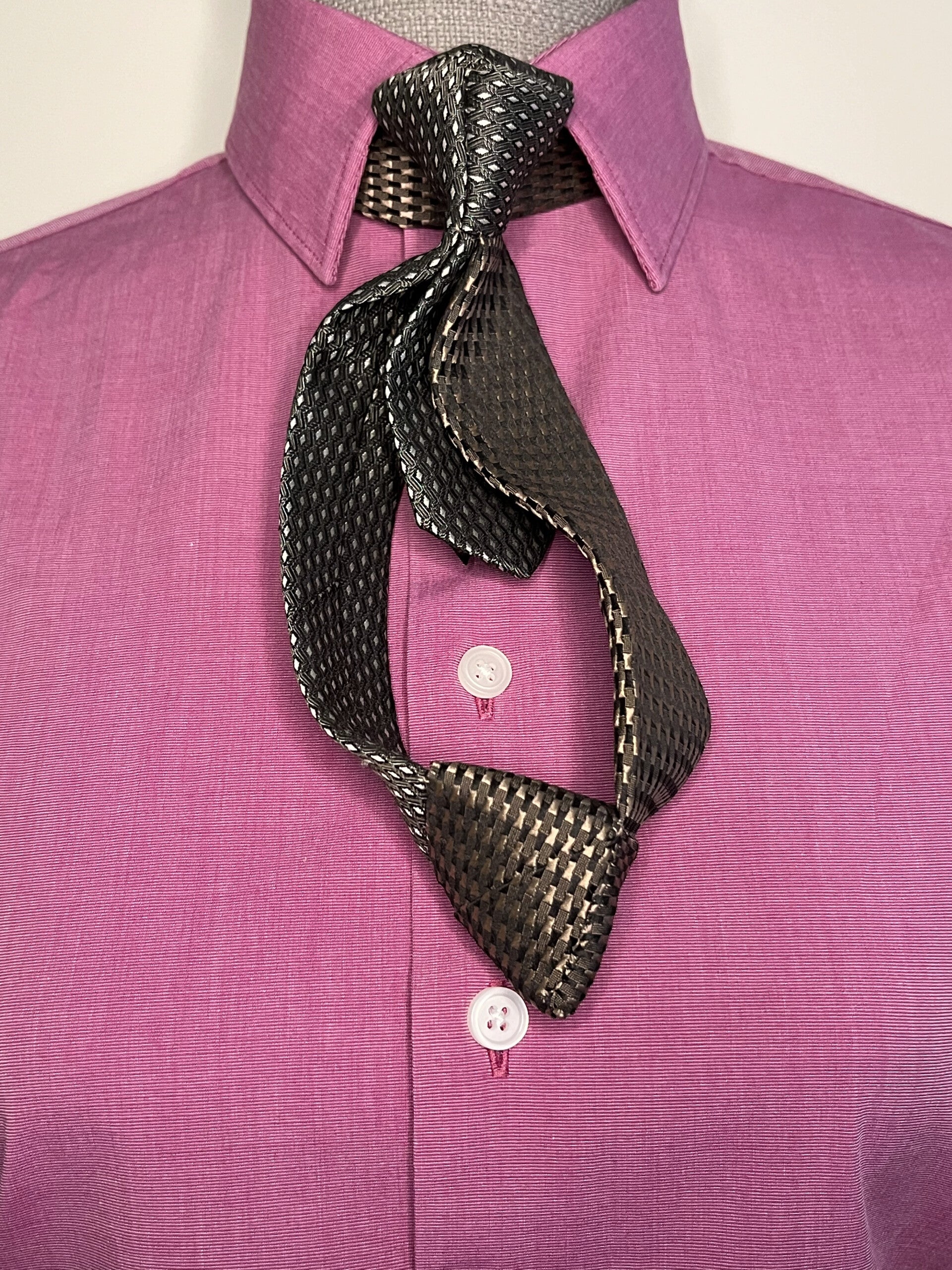
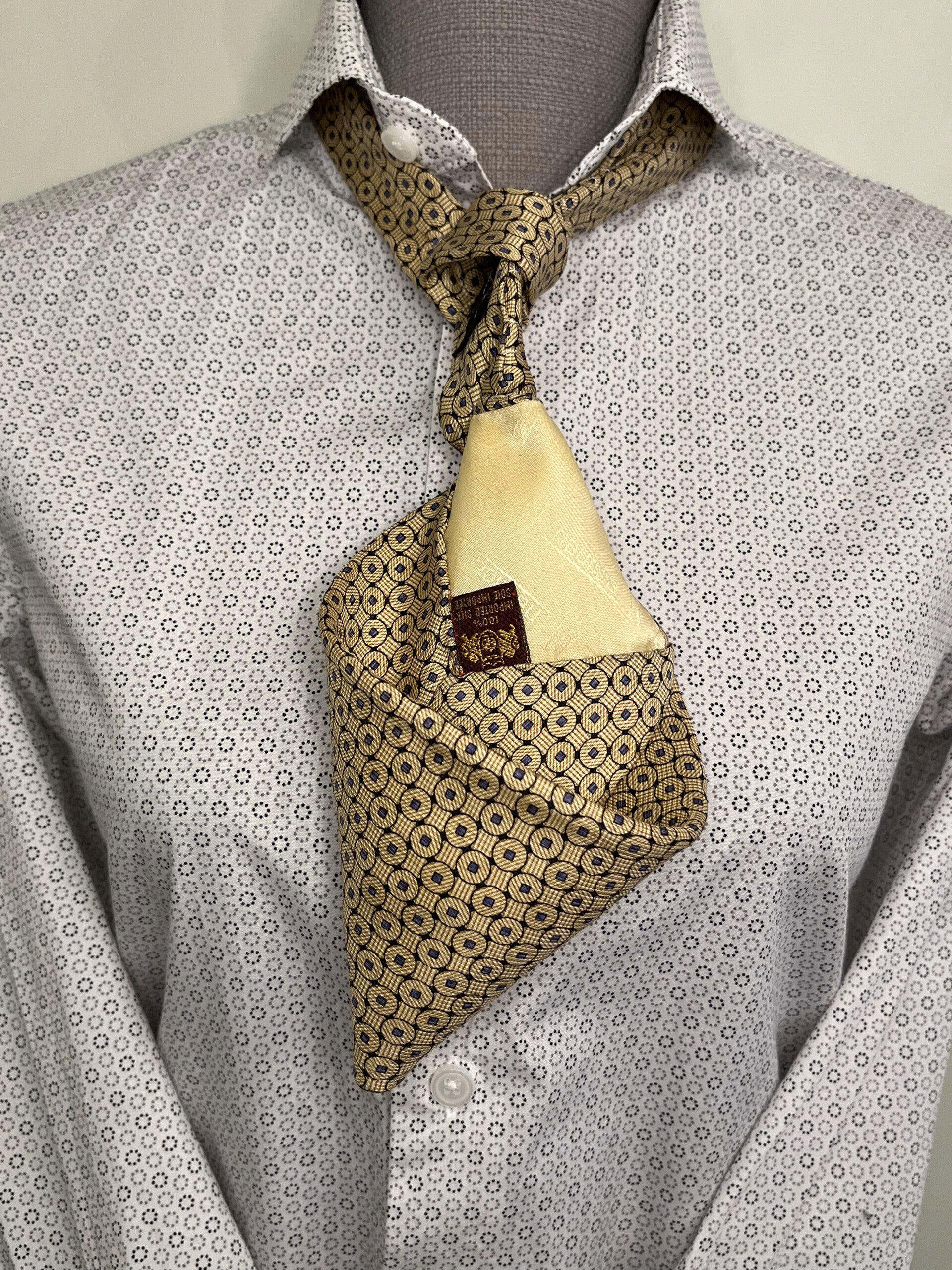
2-TickLiceMiteFly: 10 hand-sewn and reconstructed neckties; an art book of 10 images. Each page is 6” H x 4” W. A fundraiser for MFA in 2023, Department of Art and Art History, University of Caglary.
Artbook designed by Justine Bui, 2023
3-Atelier of Collars: An innovative approach to blending art with commerce, the Atelier of Collars features an Etsy shop complemented by window displays in both stores and art galleries. This component showcases the creative potential of merging communities and retail platforms with environmental awareness (to be realized).
4-Neckties/Neck rites: This fibre installation represents a creative exploration of reworking men's ties, transforming them into fibre objects that reflect themes of local vs. global perspectives, ecology, and stewardship. The installation aims to highlight the importance of environmental care within the fashion industry shift traditionally male-dominated corporations towards representations of nature and the impact of wildfires on Canada's landscape (in progress).
The process of creating this series of components involved meticulous work with men's ties, emphasizing the delicate balance between artistic expression and environmental commentary. The project serves as a response to the devastating Canadian wildfires since 2020 and particularly 2023, the worst on record, by incorporating motifs of endangered insects and reflecting on the broader impact of these ecological disasters.
The project, while a source of artistic and environmental expression, also became a therapeutic endeavour for me, addressing PTSD through the act of repetitive processes, undoing in reconstructing. Unfortunately, the project was paused in December 2023 due to the development of carpal tunnel syndrome, a condition that has been a growing concern due to my hypermobility syndrome.