of word / of skin- part 02, 1999-2001
As an ESL, English as a Second Language Learner, throughout my life, I've viewed the practice of English and the memorization of grammar as a divine pursuit. Simultaneously, I had the privilege of working with curator Tony Emily, who introduced me to post-structuralist theories in Art Theory class. These language theorists offered contrasting perspectives on the nature of written and verbal language, leaving me entranced somewhere in between.
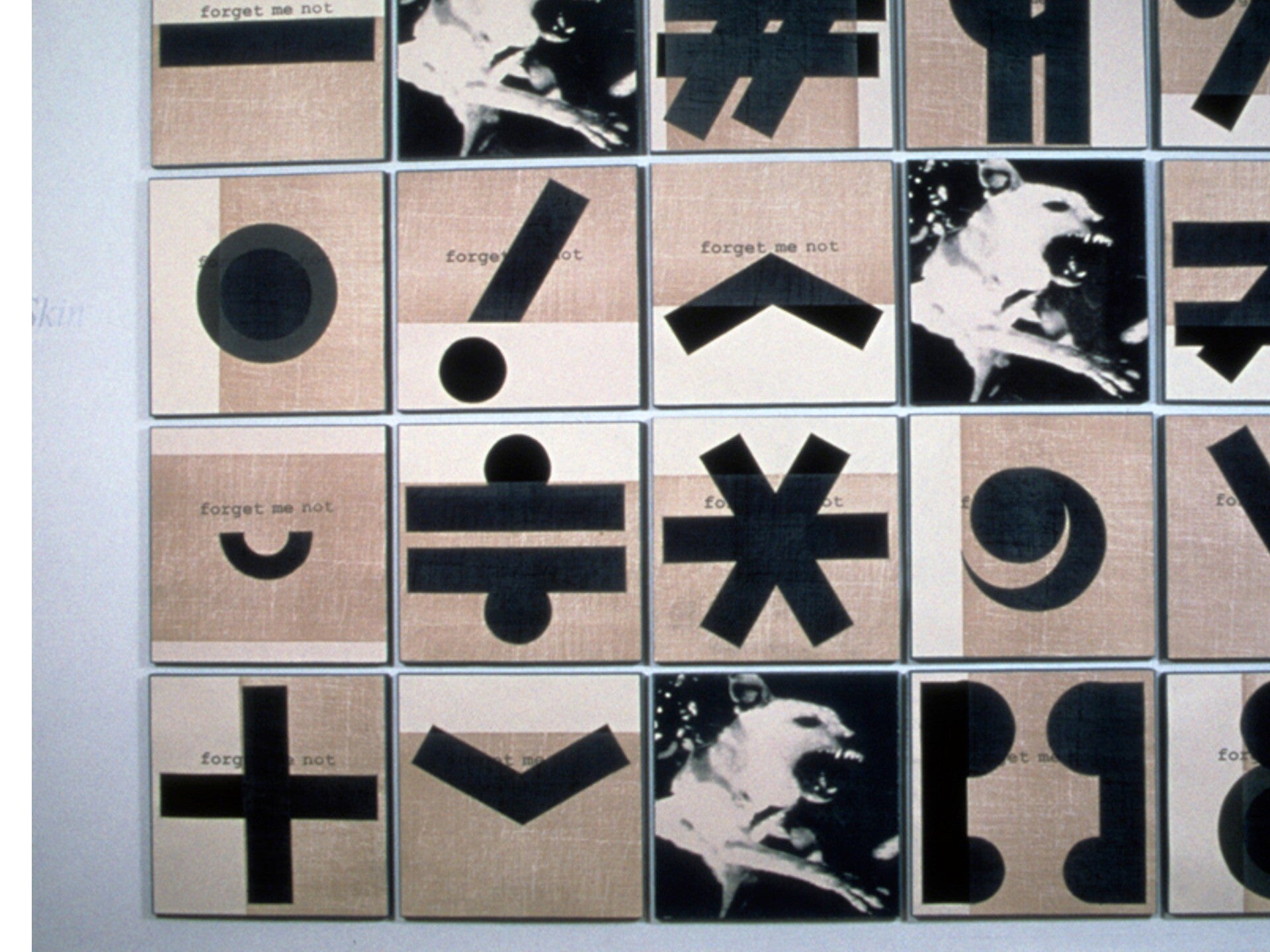
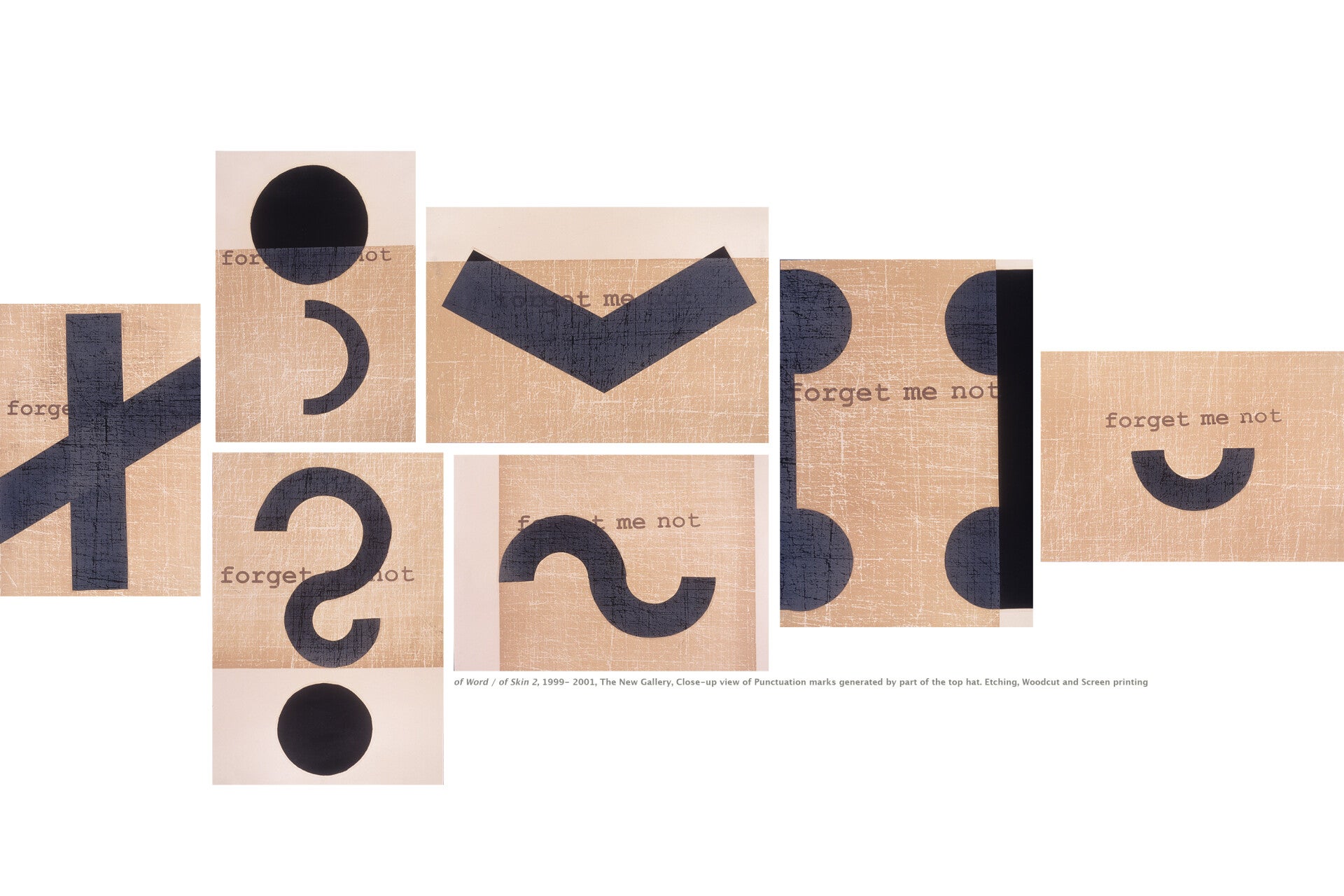
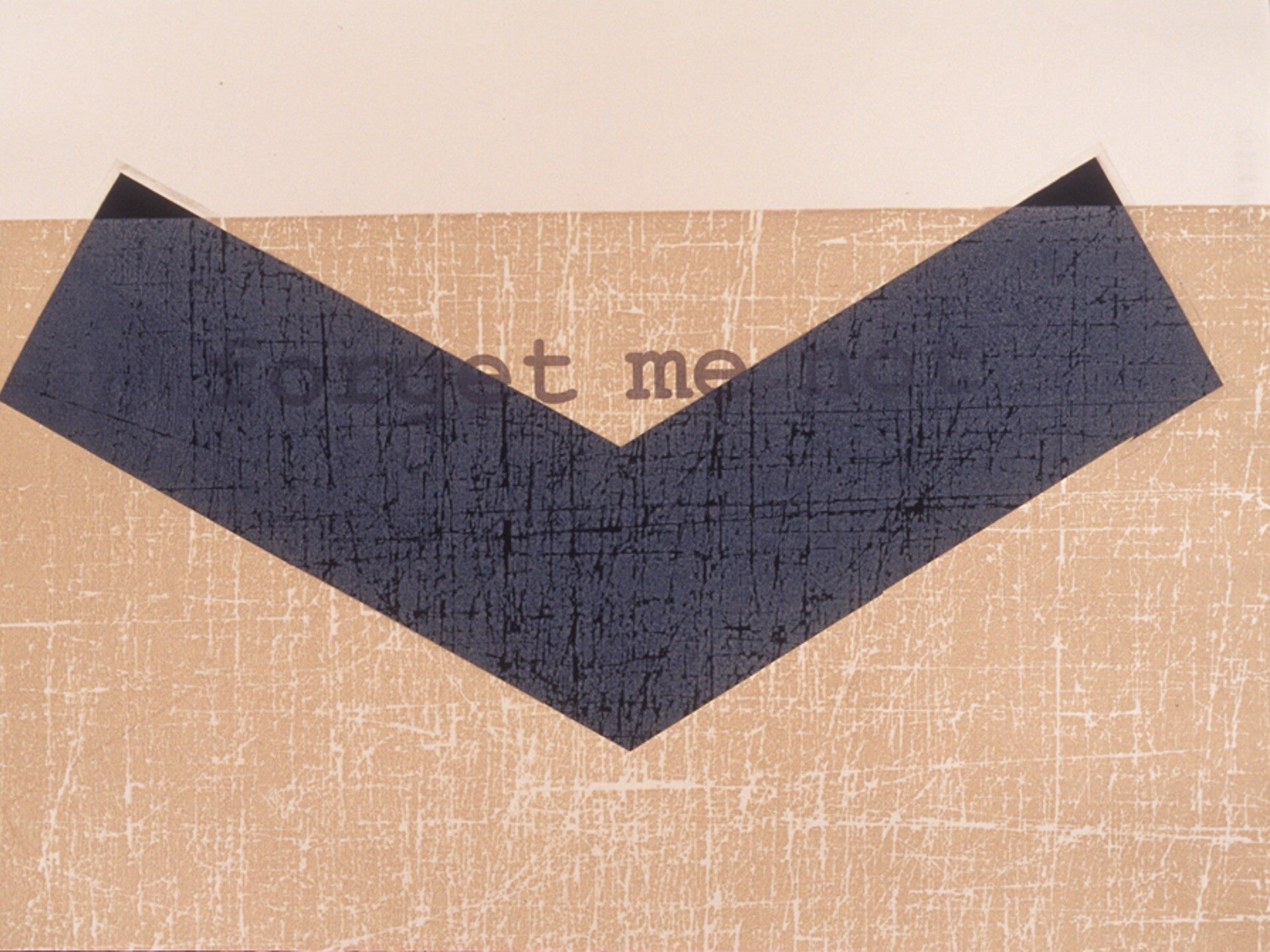
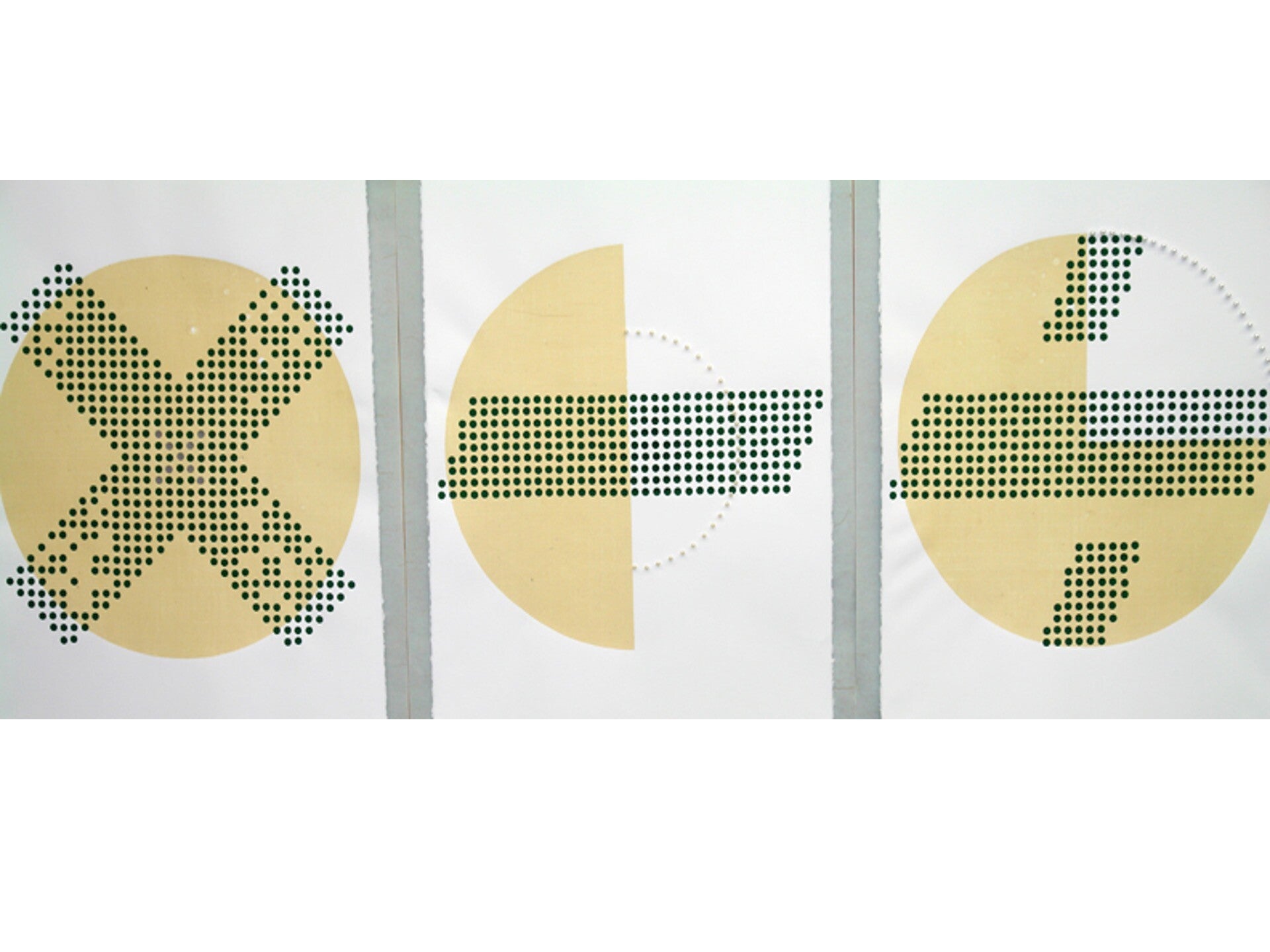
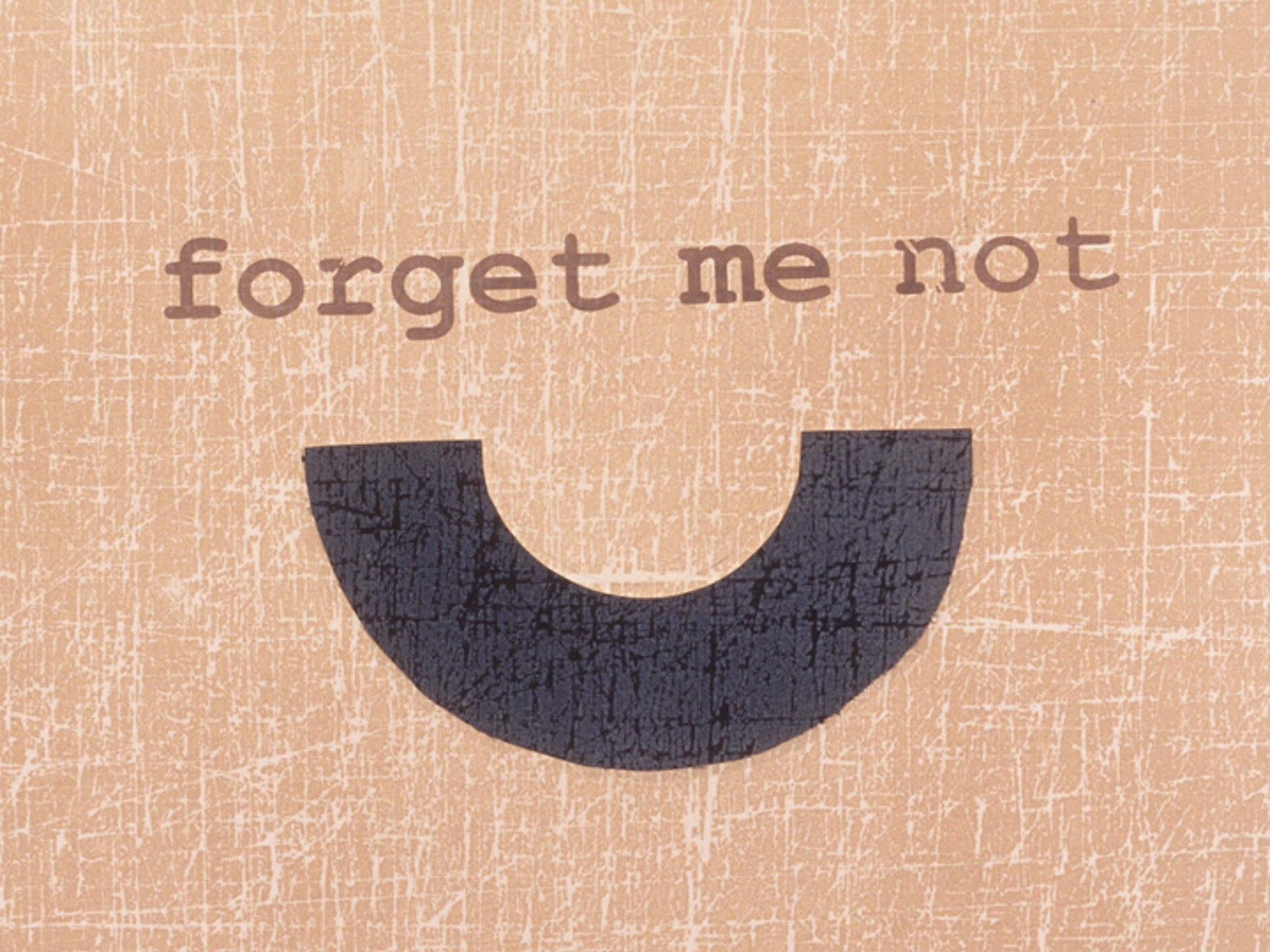
Through the process of sewing dozens of top hats, I meticulously crafted numerous shapes—circles, half-circles, and elongated rectangles. One evening, in the dim illumination, these white felt pieces emerged as stark graphic figures. I transformed these graphics into etchings and screen prints, composing a mural of punctuation marks. This choice prompts reflection on the critical role of such "minor" elements in language, especially for ESL learners. Punctuation often marks the sites of errors and subsequent judgment, serving as a harsh reminder of the learners' struggles with language.
To underscore this experience, I juxtaposed the phrase "Forget Me Not" over each punctuation mark panel. This contrast between the rote memorization involved in language learning and the eroding effects of Alzheimer's disease on both short-term and long-term memory serves as a poignant commentary on the nature of memory and learning.
The authority of the punctuation mural is further emphasized by a second visual component—a string of English top hats descending from the ceiling. This legacy of language isn't merely about mechanical procedural learning; it becomes ingrained in one's cognitive processes, shaping not only expression but also identity.