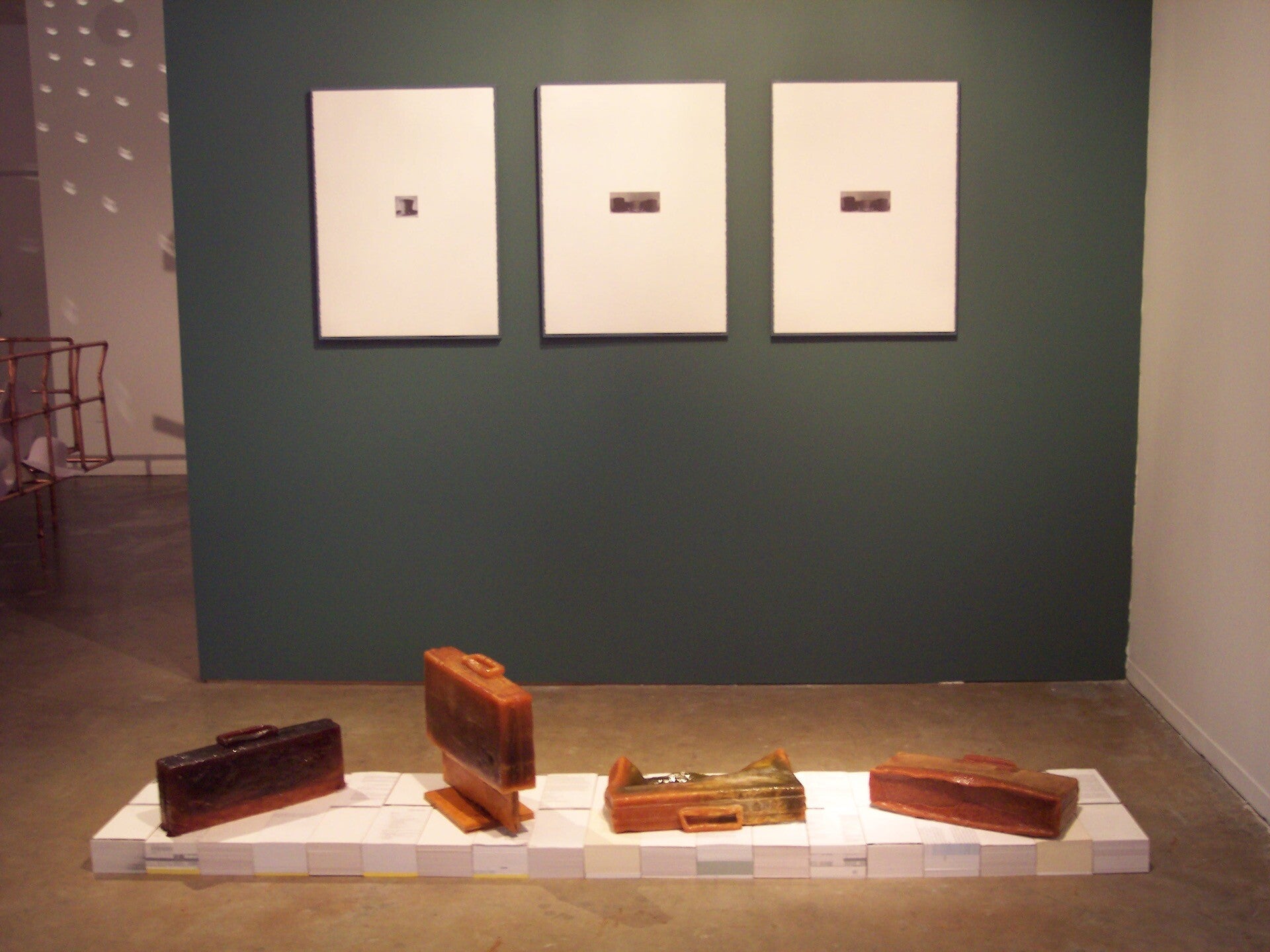
Unless, 2002-2004
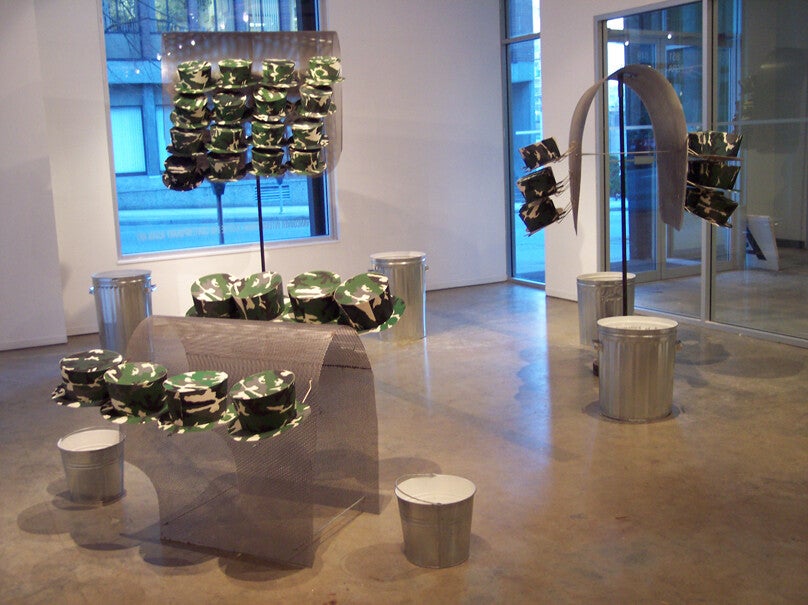
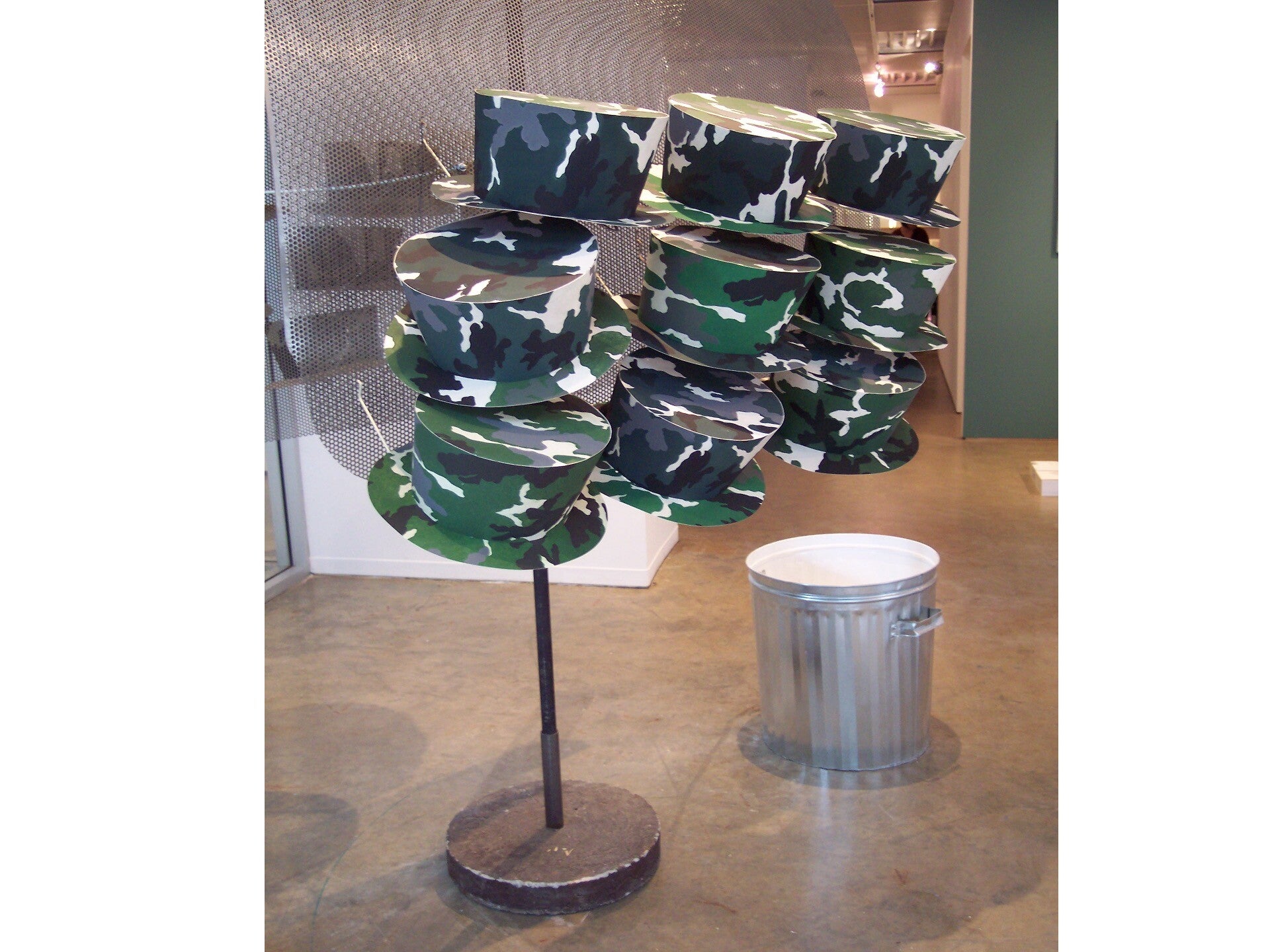
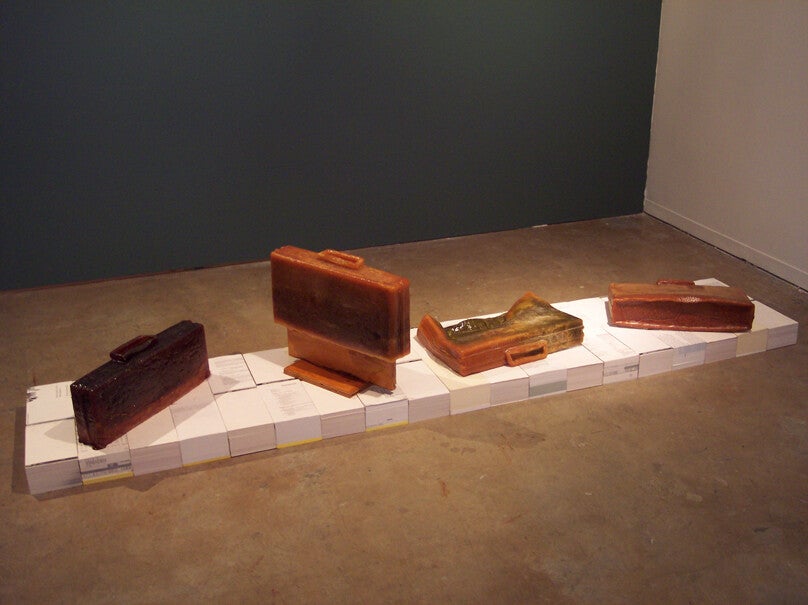
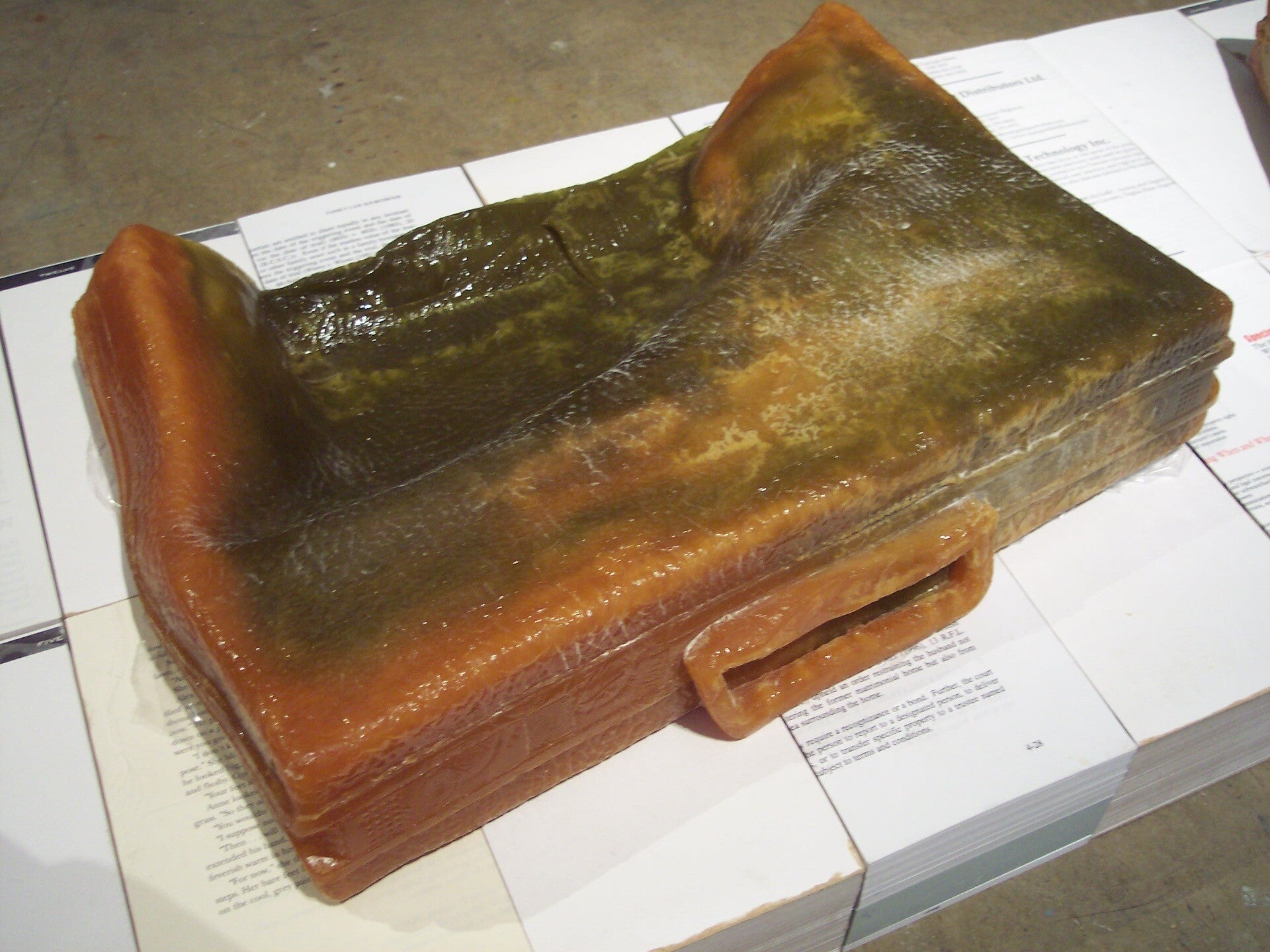
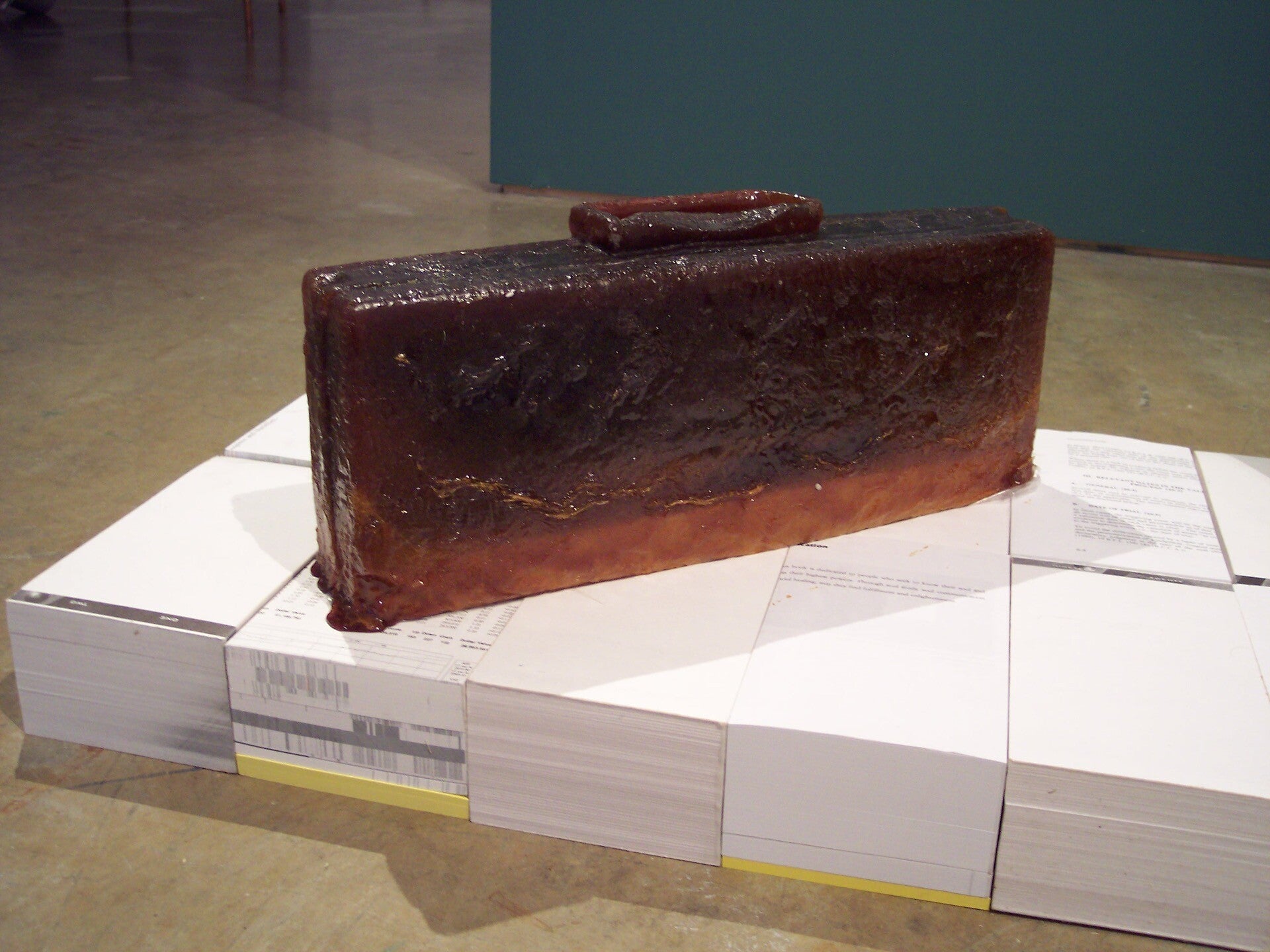
This mixed-media installation occupies 500 square feet and explores the intricate dynamics between corporations, production, and consumers across first and third world countries. Utilizing diverse elements such as text, sugar, briefcase, top hat, soldier camouflage, and saddle, it invites reflection on global interconnections.
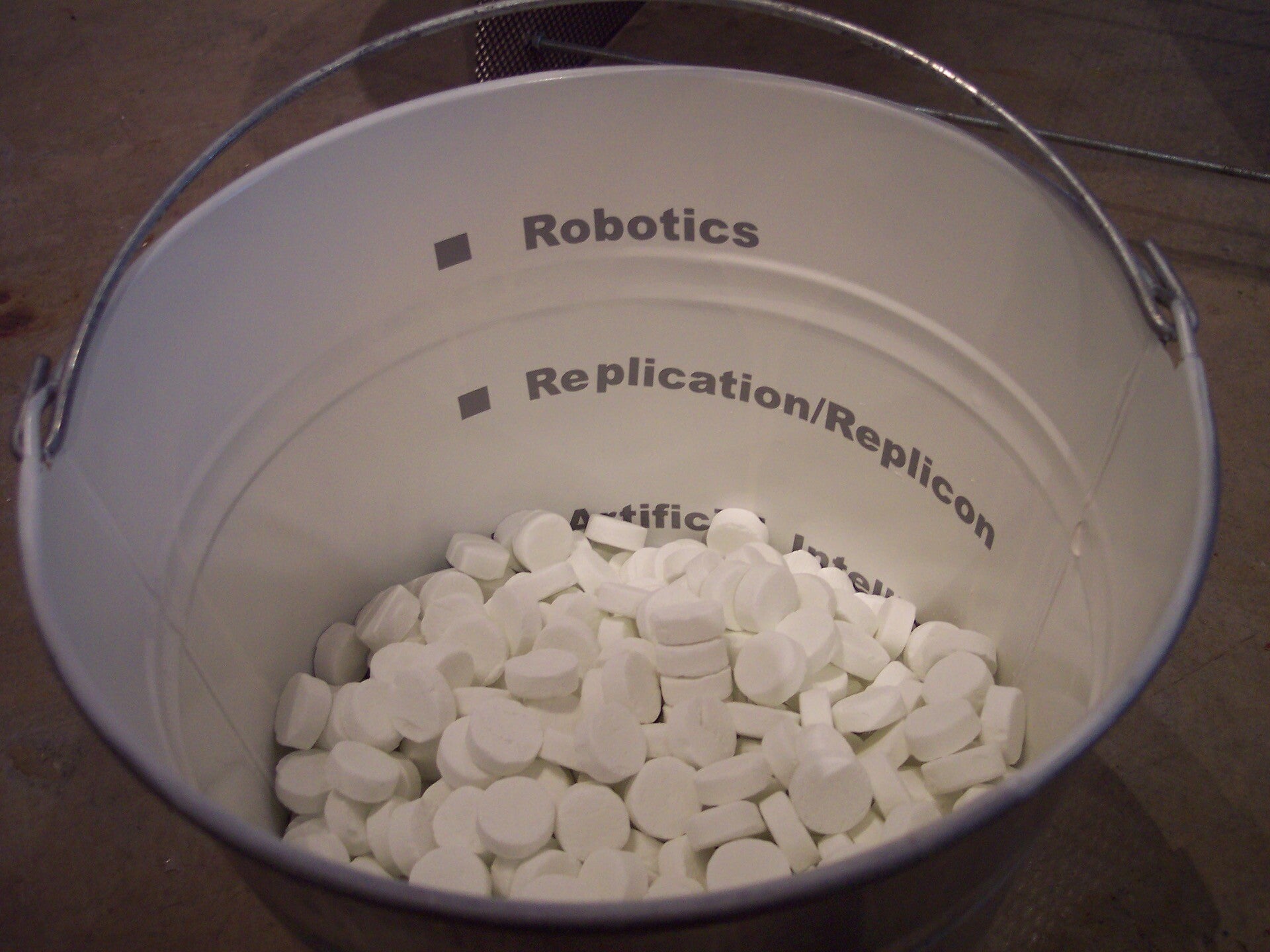
At the heart of the exhibit are three oversized metal saddles, each accompanied by reminiscent texts and cultural artifacts. The saddles display two distinct containers: one in the front for goods, represented by sugar and text, and another in the back for waste, similarly denoted by sugar and text. This duality underscores the complex flow of materials in our global economy.
Sugar is slippery used to represent the affluence and decadence associated with the wealthy class, as well as the health challenges, like diabetes, prevalent in Asian and Black communities. By pairing specific types of sugar with certain texts, the installation prompts consideration of the realities of global trade and labor conditions. Examples of these pairings include Canadian Rogers white sugar versus Chinese yellow crystal sugar, French dusting sugar versus Vietnamese block sugar, and English mints versus Indian palm sugar. This juxtaposition of texts( inside each sugar container) and sugars extends to broader themes like human rights versus artificial intelligence, cultural identity versus the informatics of domination, and the third space versus multinational capitalism.
An unexpected insight gained from the installation is the complex cycle from food to waste and back, highlighting the intricate and often troubling relationship between subjects and objects in the context of globalization. This transition challenges viewers to rethink the conventional narratives of consumption and disposal, shedding light on the deeper implications of our everyday choices in a globalized world.